
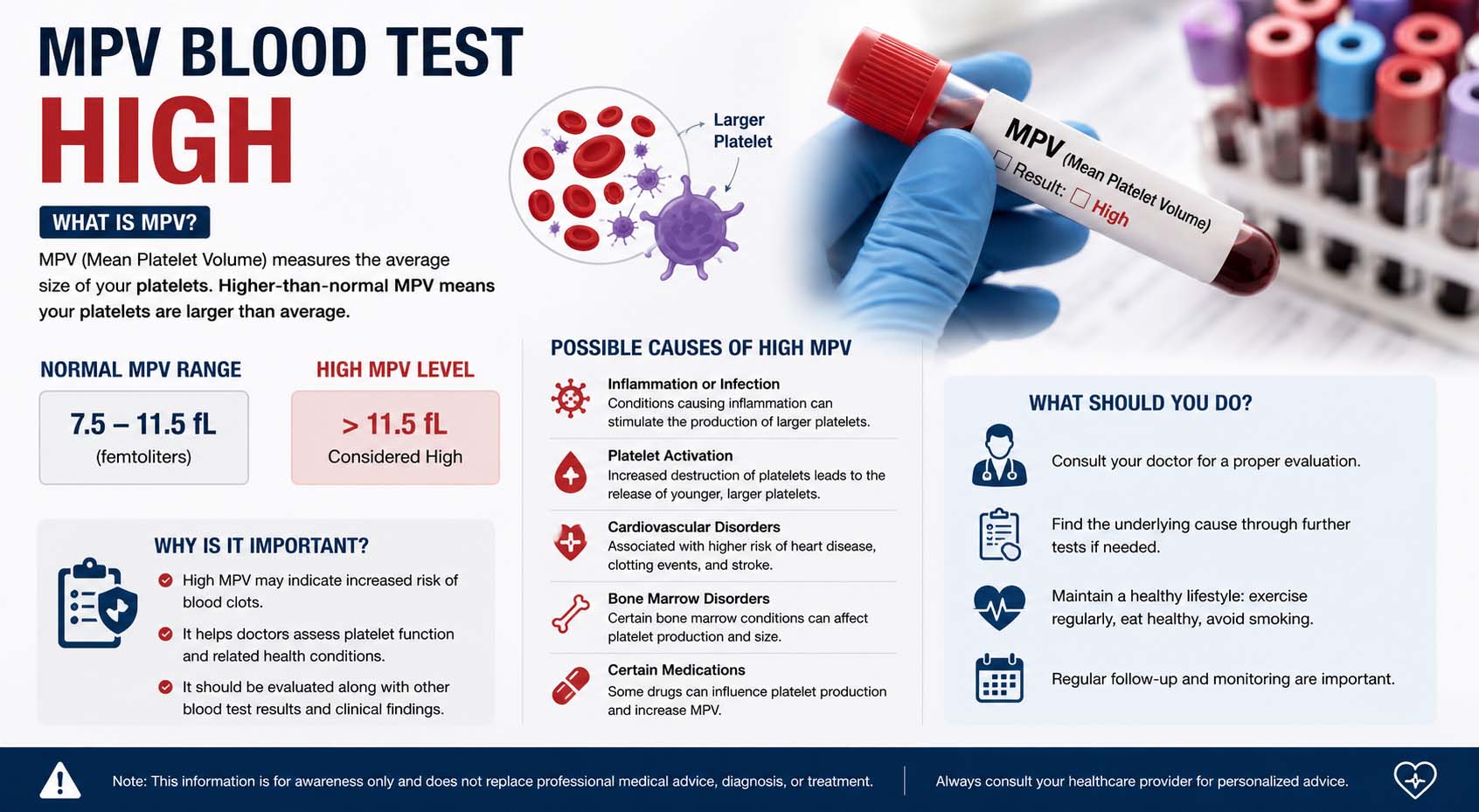
A blood test can reveal many important details about overall health, and one value that often raises questions is MPV. When people see the phrase “MPV blood test high” on their laboratory report, they may wonder whether it signals a serious condition or simply a temporary change in the body. MPV stands for Mean Platelet Volume, which measures the average size of platelets in the blood. Platelets are small blood cells that help with clotting and healing. When MPV levels are elevated, it usually means the platelets are larger than normal.
Understanding MPV results is important because platelet size can provide clues about inflammation, infections, blood disorders, and other medical conditions. A high reading does not always mean there is a major health issue, but it should be evaluated alongside other blood test results and symptoms. Therefore, doctors commonly review MPV together with platelet count, white blood cell count, and red blood cell levels to get a complete picture of health.
High MPV Blood Test and Platelet Function
A high MPV blood test result often indicates that the body is producing younger and larger platelets. Newly formed platelets are typically bigger because they are more active and efficient at clotting. In some situations, this can happen after blood loss or during recovery from illness. As a result, the bone marrow may release platelets rapidly to replace older ones, which causes the MPV level to increase.
When an injury occurs, they gather at the damaged area and form clots to stop blood loss. Larger platelets are considered more reactive, meaning they may contribute to stronger clotting activity. Because of this, elevated MPV levels are sometimes associated with cardiovascular conditions, inflammation, or certain autoimmune diseases.
Lifestyle factors can also affect platelet size. For example, smoking, stress, obesity, and poor dietary habits may influence MPV levels. In some cases, dehydration or temporary infections may cause minor changes in blood test readings. This is why healthcare professionals rarely rely on MPV alone to diagnose a disease.
Other iron-related laboratory values may also be reviewed when interpreting blood health. For example, patients may want to understand what a TIBC blood test high result can indicate.
MPV Blood Test High Meaning in Medical Reports
The MPV blood test high meaning can vary depending on the person’s health history and accompanying lab values. In many cases, an elevated MPV suggests increased platelet production. This may occur when the body is responding to inflammation, infection, or platelet destruction.
Doctors sometimes see high MPV levels in individuals with chronic inflammatory conditions such as rheumatoid arthritis or inflammatory bowel disease. It can also appear in patients with diabetes, heart disease, or high blood pressure. Since larger platelets are more likely to form clots, some studies have linked elevated MPV to a greater risk of stroke or cardiovascular complications.
However, a high result is not always dangerous. Some healthy individuals naturally have slightly larger platelets without any underlying disease. Additionally, laboratory methods can influence readings because different testing equipment may produce slightly different ranges. This is why reference values can vary between laboratories.
MPV High Blood Test and Possible Causes
An MPV high blood test result can occur for several reasons. One common cause is inflammation within the body. When inflammation is present, the immune system becomes active, and platelet production may increase. Therefore, conditions such as infections, autoimmune diseases, and chronic inflammatory disorders are often associated with elevated MPV.
Bone marrow activity can also affect MPV levels. If the bone marrow produces platelets rapidly, the blood may contain more large and immature platelets. For instance, this may happen after surgery, significant blood loss, or recovery from low platelet levels.
Heart-related conditions are another possible factor. Research has shown that people with heart disease or circulation problems sometimes have higher MPV values. Furthermore, larger platelets are more likely to stick together and form clots, which can increase cardiovascular risks.
Because liver health may influence other laboratory findings, people reviewing multiple abnormal results may also need to understand what level of AST is dangerous.
MPV Blood Test High Symptoms and Warning Signs
Many people with elevated MPV do not experience noticeable symptoms. In fact, the condition is often discovered during routine blood work. Still, there are situations where MPV blood test high symptoms may appear, especially if the underlying cause involves inflammation, infection, or circulation problems.
Fatigue is one possible symptom. Individuals may feel unusually tired if inflammation or chronic illness is affecting the body. Additionally, some people experience headaches, dizziness, or weakness. If blood clotting becomes abnormal, symptoms may include numbness, chest pain, or swelling in the legs.
Easy bruising or prolonged bleeding can sometimes occur when platelet function is affected. Although high MPV is often linked with increased clotting activity, abnormal platelet behavior may also disrupt normal healing processes.
How Doctors Evaluate High MPV Levels
When doctors evaluate a high MPV result, they usually begin by reviewing the patient’s medical history and symptoms. They may ask about recent infections, medications, smoking habits, and family history of blood disorders or heart disease.
During the evaluation, a clinician may perform a head to toe assessment to identify bruising, swelling, circulation changes, or other relevant findings.
Additional laboratory tests are often necessary. For example, a complete blood count helps determine whether platelet count, white blood cells, or red blood cells are abnormal. In some cases, doctors order tests for inflammation, clotting disorders, or vitamin deficiencies.
Managing and Preventing Elevated MPV
Treatment for elevated MPV depends entirely on the underlying cause. There is no single medication specifically designed to lower MPV. Instead, healthcare providers focus on treating the condition contributing to the abnormal reading.
Healthy lifestyle habits can support better cardiovascular and blood health. For example, regular physical activity, balanced nutrition, proper hydration, and stress management may reduce inflammation and improve overall wellness. Most importantly, avoiding smoking is especially important because tobacco use can increase platelet activity and raise cardiovascular risks.
Conclusion
Seeing “MPV blood test high” on a laboratory report can be concerning, but the result does not automatically indicate a serious illness. MPV measures platelet size, and elevated levels may occur for many reasons, including inflammation, infections, bone marrow activity, or cardiovascular conditions. Ultimately, understanding the high MPV blood test result requires examining other blood values, symptoms, and overall health history.